Khan Academy Kids

Khan Kids Assessments: CIRCLE Crosswalk

How Khan Kids assessments line up with CIRCLE Progress Monitoring (CPM), 2026-27. For each CPM measure, see the Khan Kids assessment that covers the same skill, and where the two differ.

Khan Kids complements CPM; it doesn't replace it. Khan Kids results show what a child knows, but they don't convert into CPM scores.

Aligned

Same skill, and the child answers the same way: by pointing or selecting.

Same skill, different response

Same skill, but in CPM the child says the answer aloud, and in Khan Kids the child taps it.

Partial

Khan Kids covers part of what the CPM measure includes. The Gap says what's missing.

Related skill

For CPM's observation checklists: Khan Kids measures a related skill directly, which can inform the teacher's rating.

Reported to TEA One of the five CPM scores Texas PreK programs submit to the state at the beginning and end of the year.

Literacy and Language

Rapid Letter Naming

The child names letters shown one at a time, for 60 seconds.

Reported to TEA · Emergent Literacy: Reading
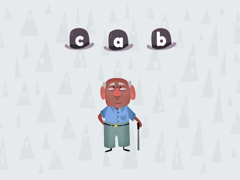
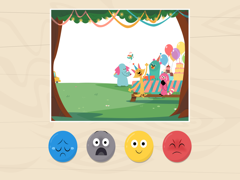
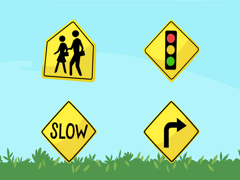
Khan Kids assessmentLetter NamesSame skill, different response

Alignment: Both assess letter-name knowledge.

Gap: Khan says a letter name and the child selects the letter, moving from more common to least common letters. CPM shows a letter and the child names it aloud. It is timed (60s, 3s per letter) and counts letters named. Khan Kids is not timed.
Rapid Vocabulary

The child names pictures of objects and actions, for 60 seconds.

Reported to TEA · Language & Communication
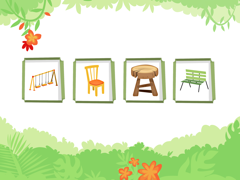
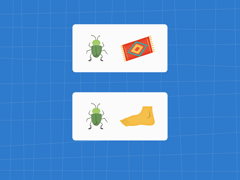
Khan Kids assessmentVocabularySame skill, different response

Alignment: Both assess vocabulary for common objects and actions.

Gap: Khan says a word and the child selects the matching picture, moving from more common to least common words. CPM shows a picture and the child names it aloud. It is timed (60s, 3s per picture). Khan Kids is not timed. Understanding a word and naming it quickly are related but different skills.
Phonological Awareness: Rhyming

Easier items: the child points to the pictures that rhyme. Harder items are oral only, with no pictures.

Khan Kids assessmentRhymingAligned

Alignment: Khan starts with kids engaging in rhyming, then selecting the word that completes the rhyme, selecting the word that rhymes with a target, and finding the two words that rhyme in a set of four words. In CPM the child points to the pictures that rhyme.

Gap: CPM's harder items are oral only, with no pictures. Khan does not assess production (saying a rhyming word).

Phonological Awareness: Sound Discrimination

The child tells whether words start with the same sound, with and without pictures.

Khan Kids assessmentBeginning SoundsAligned

Alignment: Khan starts with kids engaging in games about beginning sounds, then selecting words that start with the same sound, and in Kindergarten matching digraphs (sh, ch) and initial letters.

Gap: CPM also includes ending sounds and telling whether two words are the same. Khan assesses beginning sounds only.

Phonological Awareness: Blending

The teacher says word parts with a short pause; the child points to or says the word.

Khan Kids assessmentBlendingAligned

Alignment: Khan moves from blending two words into a compound word (snow + man), to syllables (to-ma-to), to onset and rime (r + ing) and single sounds (d-o-g) in Kindergarten.

Gap: CPM's items are at the onset-and-rime level, which Khan reaches in its Kindergarten module. On harder CPM items the child says the word aloud.

Phonological Awareness: Syllable & Sentence Awareness

The child claps once for each word in a sentence or syllable in a word.

Khan Kids assessmentBlendingPartial

Alignment: Both build awareness that sentences break into words and words into syllables.

Gap: CPM has the child take words apart by clapping. Khan has the child put parts together into a word.

Letter-Sound Correspondence

The child says the sound of each of 12 letters.

Khan Kids assessmentLetter SoundsSame skill, different response

Alignment: Both assess letter-sound knowledge.

Gap: Khan plays a sound and the child selects the letter; in Kindergarten the child also selects the sound for a letter shown. CPM shows a letter and the child says its sound.

Story Retell

After hearing a short picture story, the child retells it in their own words.

Khan Kids assessmentRetell StoriesSame skill, different response

Alignment: Both look at story structure: the main character, key events, and their order.

Gap: CPM has the child retell the story aloud and also looks for setting, problem, and ending. Khan has the child select the character and what happened next.

Story Comprehension

The child answers three questions about the story aloud.

Khan Kids assessmentAnswer QuestionsSame skill, different response

Alignment: Both ask questions about a story the child just heard. Khan covers characters' feelings, setting, key details, and cause and effect.

Gap: CPM's child answers aloud and is asked for the main idea. Khan's child selects answers and is not asked for the main idea.

Book & Print Awareness

Using a real picture book, the child shows or tells about the book and its print.

Khan Kids assessmentConcepts of PrintPartial

Alignment: Both cover telling print from pictures, holding a book correctly, where reading starts, reading left to right and top to bottom, and words on a page.

Gap: CPM also asks about the author's and illustrator's jobs, the front cover, the title, a single letter, and turning pages. CPM uses a real book; Khan uses an on-screen book.

Math

Counting

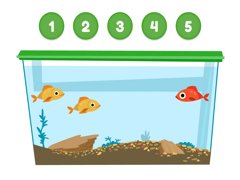
The child counts aloud, counts pictured objects, and finds a group with a given number.

Reported to TEA · Mathematics
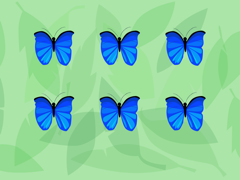
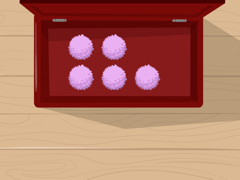
Khan Kids assessmentCount 1 by 1Partial

Alignment: Both have the child count objects and tell how many. Khan goes from 3 to 20 objects and also has the child make sets.

Gap: CPM also has the child count aloud as high as they can, and the child says each total. Khan has the child select or build it.

Khan Kids assessmentSubitizingAligned

Alignment: Both ask the child to recognize small quantities at a glance, without counting.

Numbers

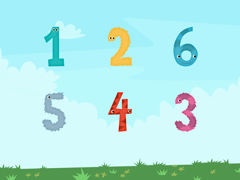
The child points to named numerals and names numerals aloud.

Reported to TEA · Mathematics
Khan Kids assessmentNumeralsPartial

Alignment: Both ask the child to find a numeral when it is named, up to 20 in Khan's Kindergarten module.

Gap: CPM also has the child name numerals aloud. Khan also has the child match numerals to quantities.

Shapes

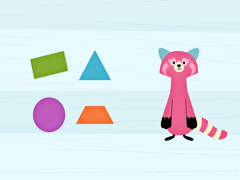
The child names shapes and finds every example of a shape in a group.

Reported to TEA · Mathematics
Khan Kids assessmentShapesPartial

Alignment: Both ask the child to find named shapes, including shapes in different sizes and orientations.

Gap: CPM also has the child name shapes aloud and includes a 3D shape.

Operations

The child solves short story problems about adding to or taking away from a group.

Reported to TEA · Mathematics
Khan Kids assessmentAddingAligned

Alignment: Both use short story problems about putting groups together.

Gap: Khan's Adding assessment starts at the Age 4 level.

Khan Kids assessmentSubtractingAligned

Alignment: Both use short story problems about taking some away.

Gap: Khan's Subtracting assessment starts at the Age 4 level.

Patterns

The child points to what comes next in a pattern.

Reported to TEA · Mathematics
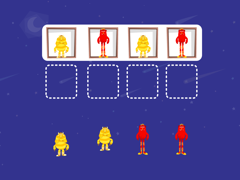
Khan Kids assessmentPatternsAligned

Alignment: Both ask the child to choose what comes next in a pattern. Khan also has the child copy patterns and fill in missing pieces.

Math Language

The child points to answers about size, amount, order, and position.

Reported to TEA · Mathematics
Khan Kids assessmentMeasurementPartial

Alignment: Taller, shorter, and measuring height and length.

Gap: CPM also asks about capacity (how much a container holds), which Khan does not assess.

Khan Kids assessmentMore or LessPartial

Alignment: More, fewer, and the same, plus first, second, third.

Khan Kids assessmentPosition of ObjectsPartial

Alignment: Position words, from the most common ones to two-part directions.

Observation Checklists

Approaches to Learning

Teacher-rated checklist: initiative, curiosity, flexibility, creativity.

Khan Kids assessmentFlexible ThinkingRelated skill

Alignment: Khan's card-sorting task measures flexible thinking directly, a skill the checklist rates from classroom observation.

Gap: Khan results can inform a teacher's rating but don't replace it.

Social & Emotional

Teacher-rated checklist: social behavior, self-regulation, self-care, attention.

Reported to TEA · Health & Wellness
Khan Kids assessmentImpulse ControlRelated skill

Alignment: Impulse control relates to the checklist's self-regulation items.

Khan Kids assessmentWorking MemoryRelated skill

Alignment: Working memory supports the checklist's attention items.

Gap: Both Khan assessments touch a small part of a broad checklist.

CPM measures without a Khan Kids match

Khan Kids doesn't assess these areas.

  • ScienceDirect measure
  • Social StudiesDirect measure
  • Early WritingChecklist · reported to TEA (ECDS Writing)
  • Physical Development & HealthChecklist
  • Speech Production & Sentence SkillsChecklist
  • Motivation to ReadChecklist

Khan Kids assessments without a CPM match

These language assessments cover word meanings, which CPM doesn't measure.

Word Categories
Shared Characteristics